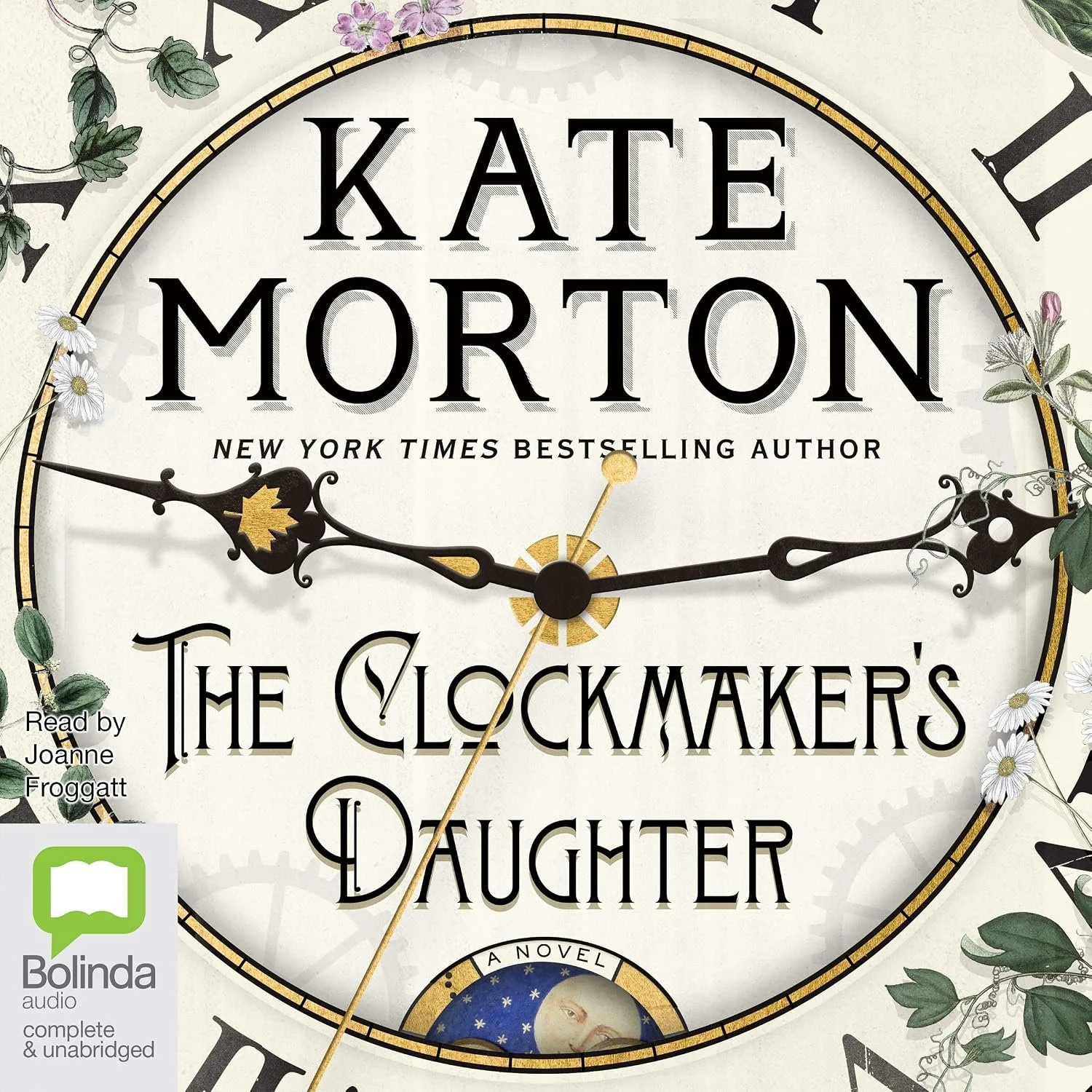
The Clockmaker’s Daughter (by Kate Morton)
A beautiful house, a ghost worth staying for, and a novel that would not hold still.
The Clockmaker’s Daughter is the Kate Morton novel that finally wore me out.
Elodie, an archivist in modern London, finds an old photograph and a satchel of sketches that lead her to Birchwood Manor, a house on the Upper Thames with a long, uneasy history. From there the novel moves through the artists who gathered at the house in the 1860s, a ghost who has remained there ever since, and a series of later women whose lives brush against the same rooms. Love, theft, a disappearance, and a death sit at the center of it. Morton tells it by changing perspective and century, often for long stretches.
I went in hoping for the feeling I had with The Forgotten Garden. That was the first of hers I read, and I loved it. The Lake House was really good. The Distant Hours did not particularly work for me. This one did not meet the expectation I have been chasing ever since that first book. I love historical fiction, and Morton’s descriptive writing is still exceptional. The manor house is the best thing in the book. Birchwood is vivid enough that I could walk the rooms. The ghostly presence is the other piece that held me. Whenever the story settled on the house and that voice, I was in.
Everything else fought me.
There is a massive cast, and for most of the book they do not seem to belong in the same story. Morton moves from one perspective to another, and each time someone new arrived I lost the thread. She does spend real time with each of them, long enough that I became immersed in that person’s life. Then I would surface and still have no idea how this person fit with the people I had already met. It felt like I was listening to several books at once. I am tired of the dual-timeline trope, and this is not even dual. There are more timelines than I cared to count. The story is disjointed. Connections do not start locking into place until the last few hours.
Elodie, the character the book opens with, gets left behind for a very long time. I kept waiting to come back to her and instead landed in another century with another set of people I had to learn from scratch.
I seriously considered bailing. Then a new portion of the story pulled me in, and I decided to stick with it. That happened more than once. The ending was shaping up to be satisfying, and then it concluded so abruptly that I was left with some version of “what, that’s it?” I did not hate the book. I just did not love it the way I hoped I would.
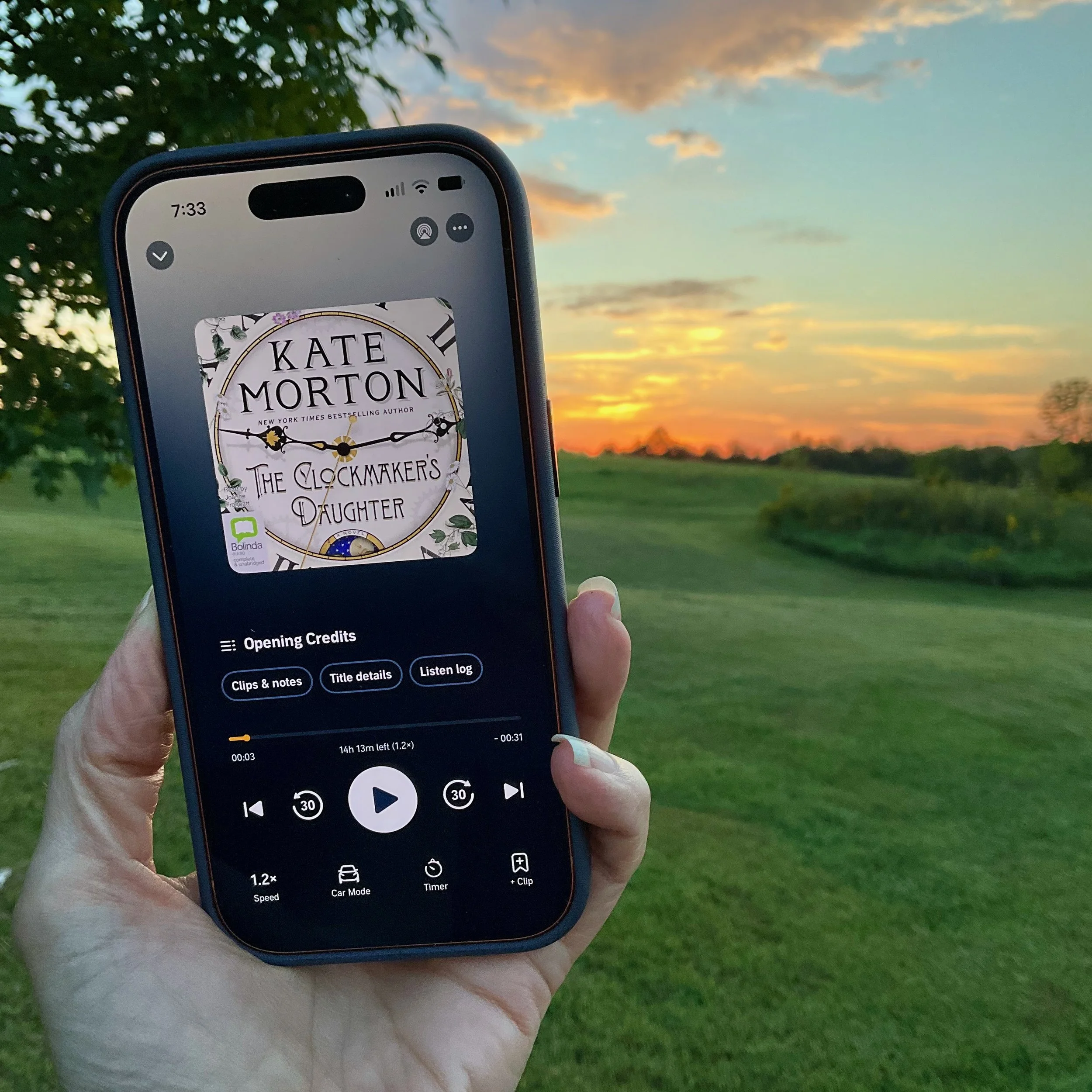
Joanne Froggatt’s narration is really good. She is the reason some of those long stretches stayed listenable.
What I am left with is a beautiful house, a ghost I wanted more of, and a novel that asked me to hold too many lives at once. The pieces do come together, late and quickly, and by then I was more relieved than moved.
I already own The House at Riverton and The Secret Keeper in my Audible library. I wish I had not bought them, because after this one I want to be done with Morton. I will probably try them someday, since they are already in my library, and I will hope for the best. I will not be buying any more of her books. I have even considered saving those two until they are the last things left in my Audible library, so it does not feel like I am discarding them.
I will also likely die with a good amount of books still sitting in that library.
You can read my review for The Distant Hours here. Even then, I was cooler on it than I wanted to be.
As a participant in the Amazon Associates Program, I earn from qualifying purchases linked back to Amazon. Every penny earned allows me to blog about books and keeps this site running.
