
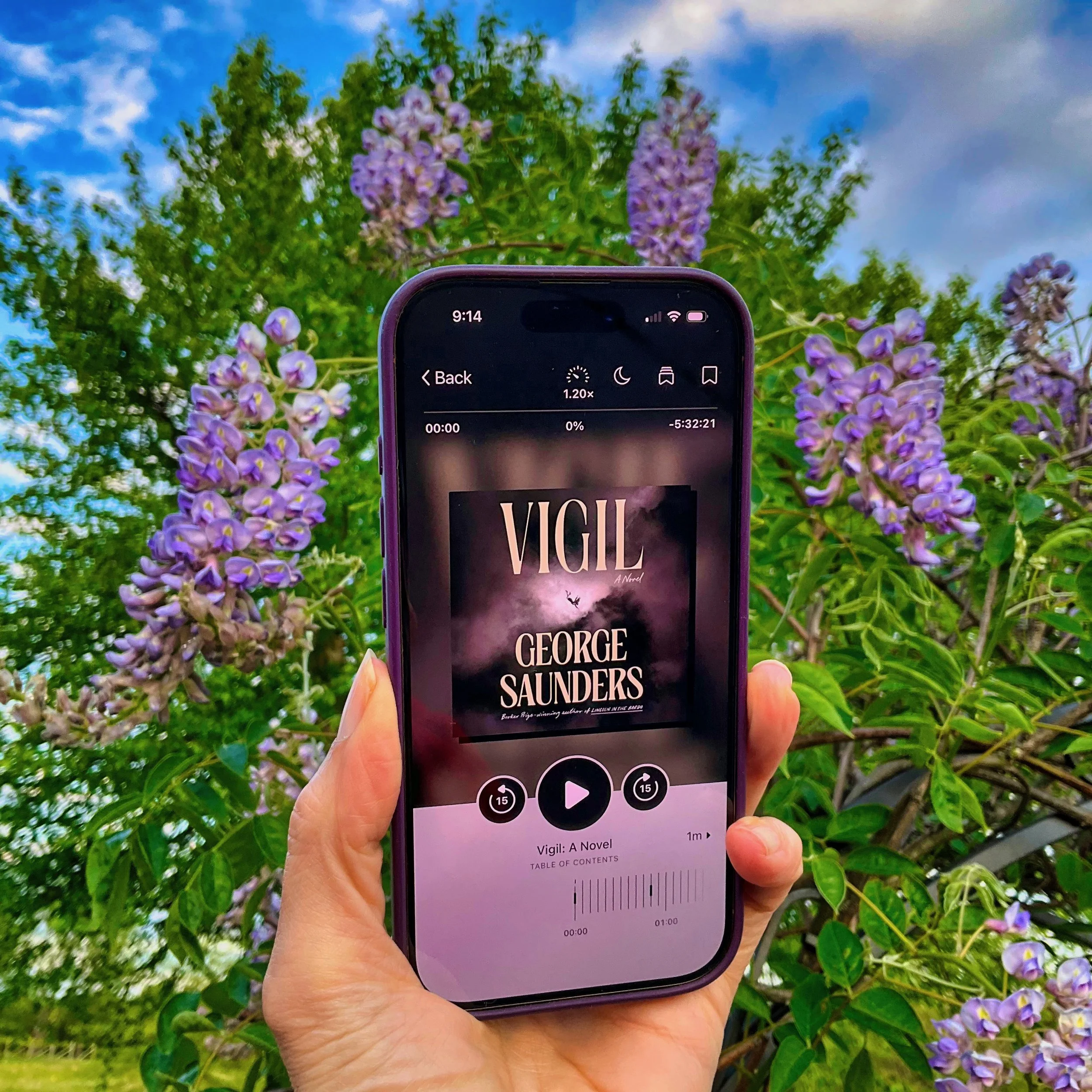
I’m probably one of the few readers who has never picked up a George Saunders book. Despite the overwhelming praise and his reputation as one of America’s most inventive writers, his work has never quite called to me—until now.
When early promotions for his new novel Vigil started appearing, the premise immediately caught my attention. As I’ve gotten older, I’ve found myself drawn to stories about aging, mortality, and the dying process. The description—a tale set mostly during the final hours of a powerful man’s life, grappling with legacy, responsibility, forgiveness, and reckoning with one’s choices—sounded like the perfect fit for where I am right now.
So I placed a hold on the audiobook and waited. And waited. By the time it finally became available, months later, I’d seen enough lukewarm and negative reviews to feel skeptical. At this point in my reading life, I’ve become much more comfortable DNFing books that aren’t working for me. I went into Vigil with zero guilt about bailing early if needed.
Unfortunately, that’s exactly what happened. Within the first hour or so, I felt completely lost. The story didn’t make sense to me, the unusual narrative style left me confused rather than intrigued, and the full-cast narration—with its overlapping voices and choral sections—started to feel more obnoxious than immersive. I pushed on a little longer, hoping it would click, but eventually decided it wasn’t worth forcing.
Vigil may very well be a brilliant book for the right reader. It just wasn’t the right match for me. Sometimes a book and a reader simply don’t connect, and that’s okay. I’m still open to trying Saunders again someday, perhaps with one of his earlier, more celebrated works. But for this one, I’m moving on.
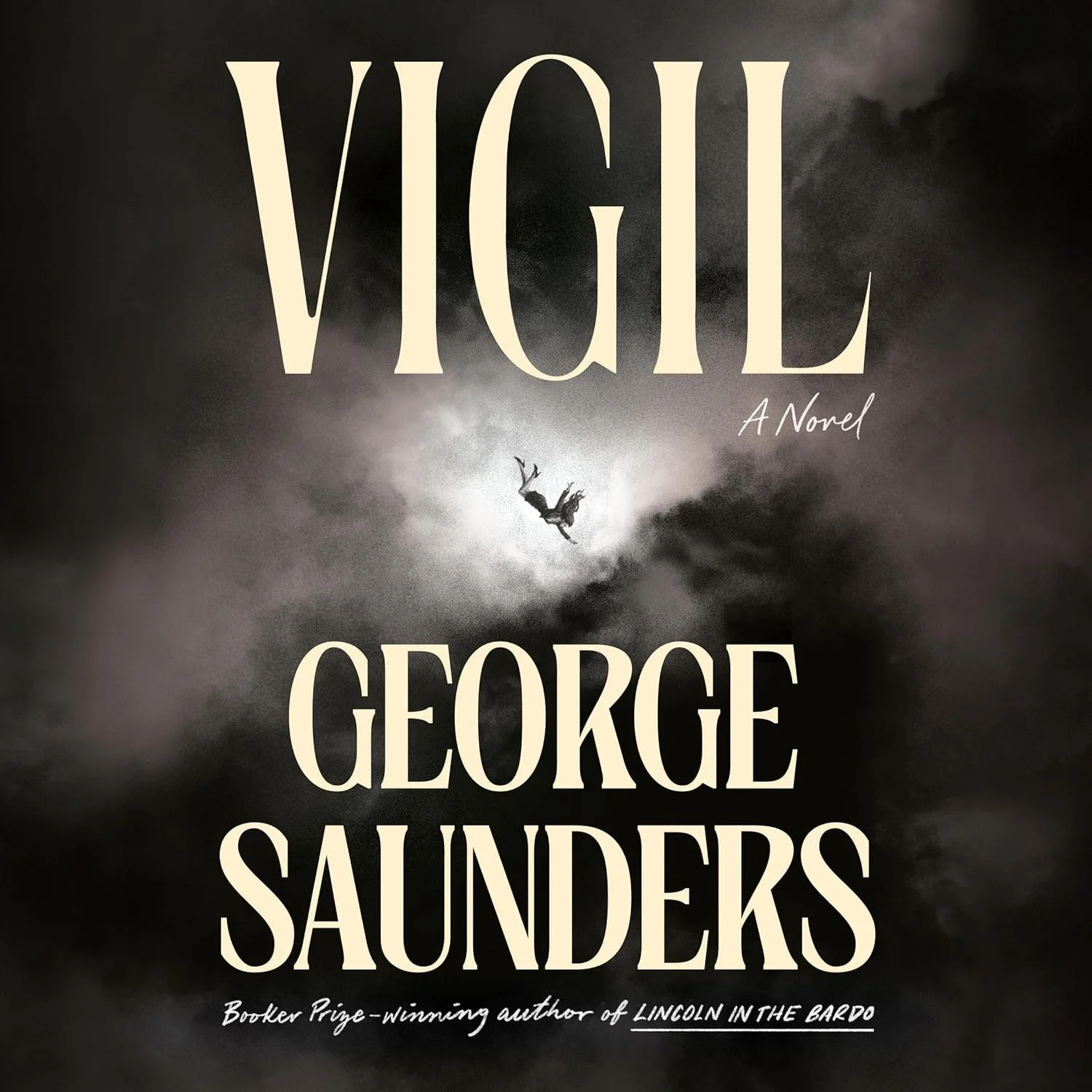
As a participant in the Amazon Associates Program, I earn from qualifying purchases linked back to Amazon. Every penny earned allows me to blog about books and keeps this site running.
