
An honest first look at Ann Patchett’s quiet novel of reconnection and memory
Ann Patchett has been on my bookish radar for ages, but I had never read any of her work until now. Whistler is my first Patchett novel. I’m aware of her reputation as a writer and of her ownership of Parnassus Books in Nashville, Tennessee. I’ll definitely be visiting her store the next time I’m in the country music capital.
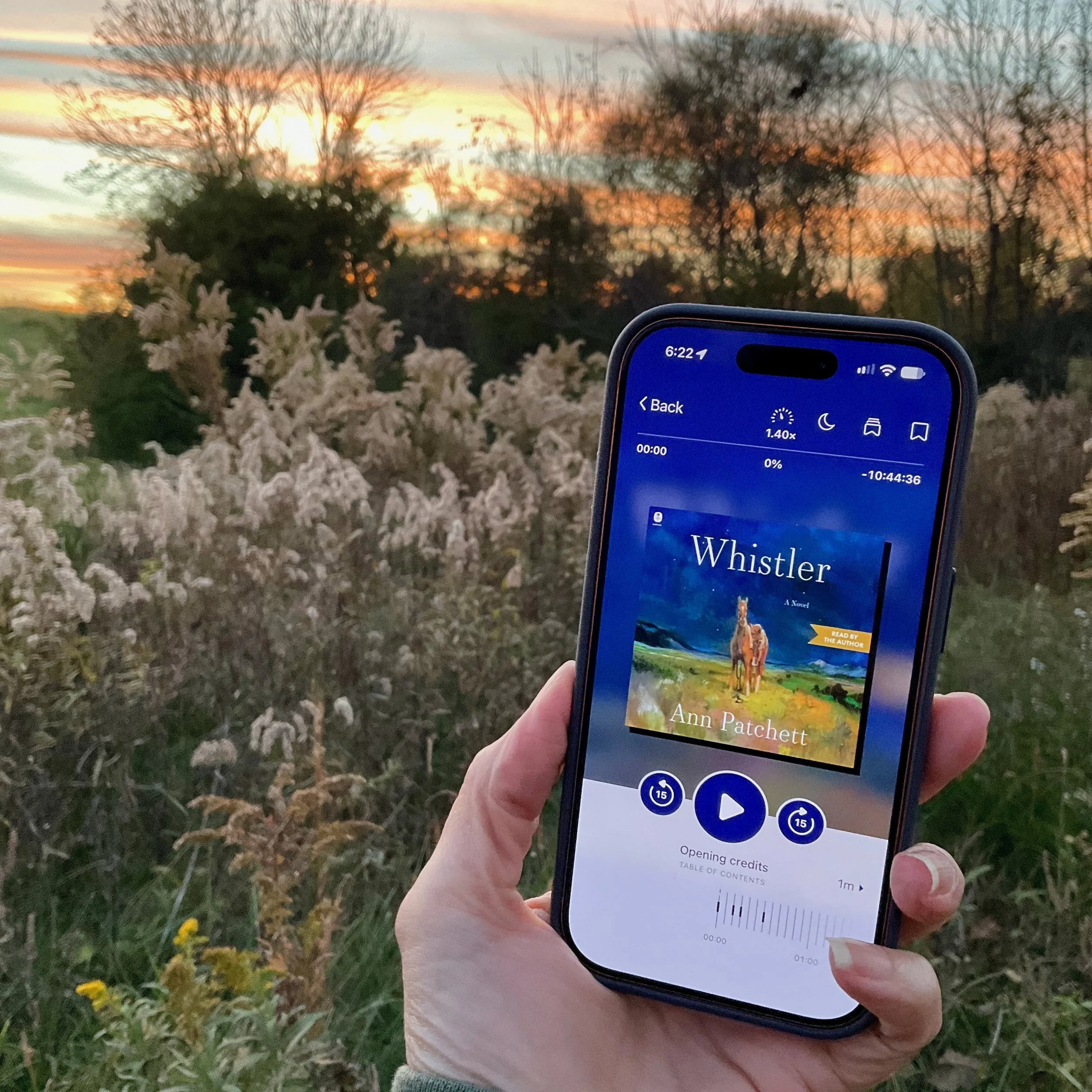
I borrowed the audiobook through Libby and loved that Patchett narrated it herself. Her voice was exceptional for the story—calm, precise, and perfectly suited to the quiet emotional register of the book.
Daphne Fuller, a 53-year-old English teacher living in New York with her husband Jonathan, is visiting the Metropolitan Museum of Art when Jonathan notices an older white-haired man following them. He turns out to be Eddie Triplett, her former stepfather, who was married to her mother Abigail for just over a year when Daphne was nine. She hasn’t seen him in more than forty years, not since a fateful winter night that fractured their family. The novel moves between Daphne’s present-day first-person account of their unexpected reunion and third-person flashbacks to January 1980. As adult Daphne and Eddie carefully reconstruct what happened, old nicknames, shared memories, and the quiet intensity of their short time together resurface.
I enjoyed Whistler, but not as much as I thought I would. It wasn’t a novel that knocked my socks off. The hype surrounding the book raised my expectations and left me less impressed than I’d hoped.
What I loved most was how the novel explores blended families, the lasting impact of brief but profound relationships, the ways memory softens and distorts the past, and the small, consequential moments that shape a life. The present-day scenes of Daphne and Eddie getting to know each other again were especially strong. Learning about their time together during her childhood was also interesting, and it felt useful for Daphne to better understand what had happened between Eddie and Abigail.
That said, I got tired of hearing about the accident. I don’t mean that from a lack of caring—the scene is clearly pivotal—but it felt overly drawn out and repetitive as the main thread of the story. I understand its importance at the time, yet it could have been handled more concisely or introduced earlier so it didn’t dominate the book. The ending also felt abrupt and a bit flat. This is the kind of story that could continue indefinitely, and while it needed to end, the resolution didn’t land with the emotional weight the rest of the novel had built.
Still, I’m glad I finally read Patchett. Whistler is a thoughtful, intimate novel about reconnection and the people who shape us, even briefly. It didn’t quite live up to the surrounding praise for me, but it was enough to make me curious about more of her work.
As a participant in the Amazon Associates Program, I earn from qualifying purchases linked back to Amazon. Every penny earned allows me to blog about books and keeps this site running.
