

I have long admired John Douglas's work as a criminal profiler with the FBI's Behavioral Analysis Unit through his true crime books. His first book, Mindhunter, was actually influential in my own career choice. As a young adult, I devoured true crime, but once I began working with offenders in a rehabilitation setting, I rarely picked up the genre. I needed other kinds of reading to restore my energy. Now that I'm settled into retirement, I'm finally ready to dive back into the true crime books I've continued to collect over the years.
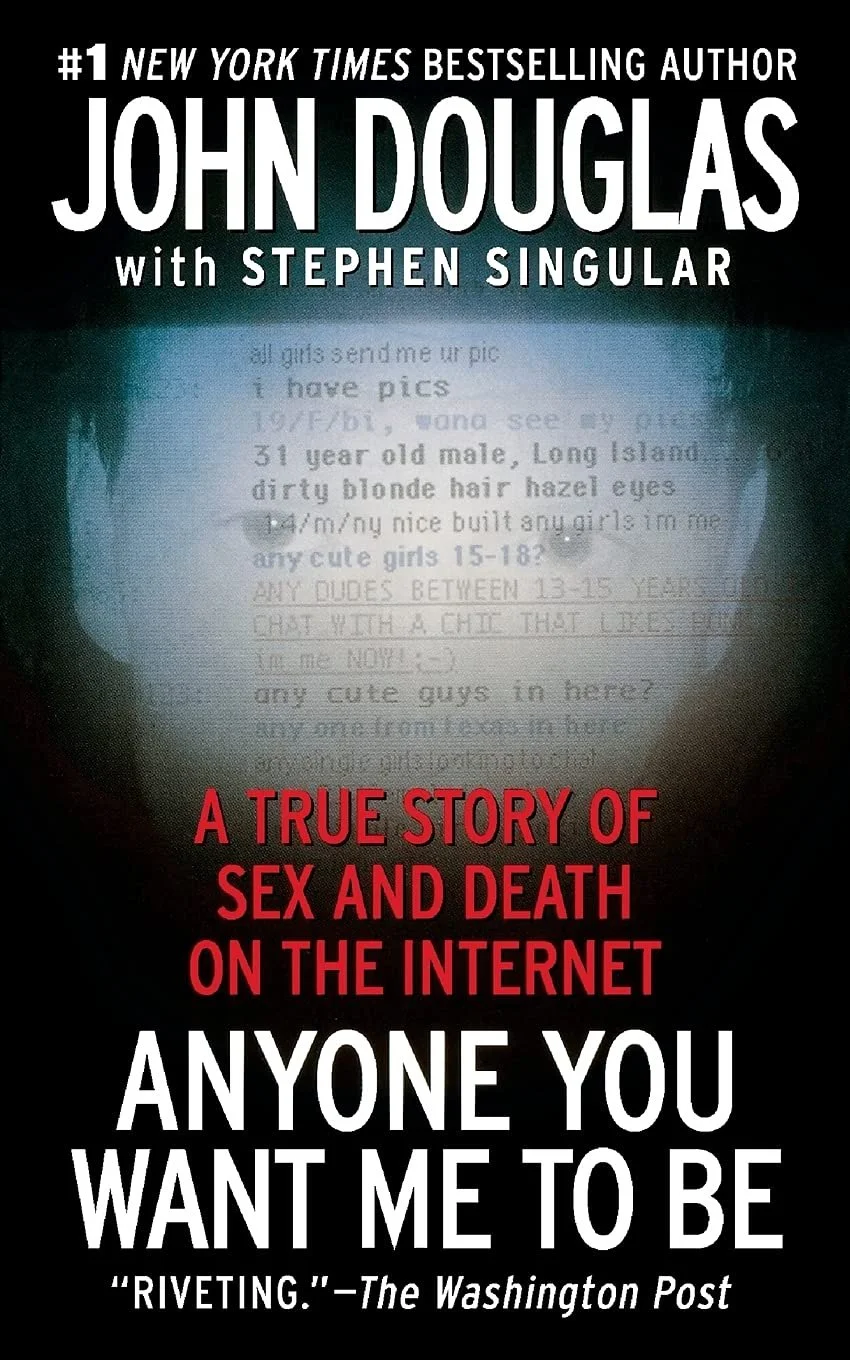
John Douglas's Anyone You Want Me to Be: A True Story of Sex and Death on the Internet has been sitting on my bookshelf since its 2003 publication. It's a true crime account of John Robinson, one of America's first known internet serial killers. A seemingly upstanding family man and businessman in Kansas, Robinson used early online chat rooms in the 1990s to prey on vulnerable women, luring them with promises of jobs, romance, and new beginnings — before murdering them. The book follows the investigation that eventually brought him down, drawing on Douglas's legendary career as an FBI criminal profiler to examine Robinson's psychology, his carefully constructed double life. It's a disturbing and fascinating look at how a predator adapted his methods to exploit emerging technology — and how investigators had to adapt right along with him.
Some might see this story as dated because of the vintage technology involved, but I found it more like a history lesson in the early days of the internet. It was nice to reminisce about a time period I lived through. I was also interested in how law enforcement had to work to catch up with the technology Robinson exploited, both in the investigation and the eventual prosecution.
I appreciated how Douglas traced Robinson's criminal career from its beginnings all the way to his arrest. He highlights the key moments that contributed to the escalation of his crimes — most notably the failure to hold him properly accountable for his earlier offenses. From my professional experience working with offenders, I was reminded again of the importance of holding people accountable for their actions. When individuals don't face real consequences, their behavior rarely changes. Douglas does a good job showing how Robinson's earlier crimes were not taken seriously enough, which allowed him to escalate.
The crimes themselves were deeply disturbing, and I felt real sorrow for the women Robinson victimized. I was shocked by how willing some of them were to leave their homes and relocate to Kansas based on his promises. It was surprising — and sad — how trusting people can be. I was particularly troubled by the portrayal of Robinson's wife. Her role was especially nuanced — she initially came across as frustrating for staying with him despite his infidelity and for refusing to believe he was a killer. But Douglas makes a convincing case that she was manipulated too, essentially groomed over the years for her role as wife and mother.
The book concludes with appendices that include statistics (now obviously outdated) along with practical safety suggestions from Douglas for interacting with strangers online and for parents whose children use the internet. Many of those recommendations still feel relevant and helpful today.
True crime isn't for everyone, and this one in particular carries heavy content warnings due to the violence that befell these women. That said, the authors handled the material with great respect and care for the victims and their families, even as Robinson's crimes grew increasingly horrific.
Anyone You Want Me to Be was a solid re-entry into true crime for me, and I'm looking forward to reading more of Douglas's work now that I have the mental space for it again.
As a participant in the Amazon Associates Program, I earn from qualifying purchases linked back to Amazon. Every penny earned allows me to blog about books and keeps this site running.
