The Complete Letters of Vincent van Gogh
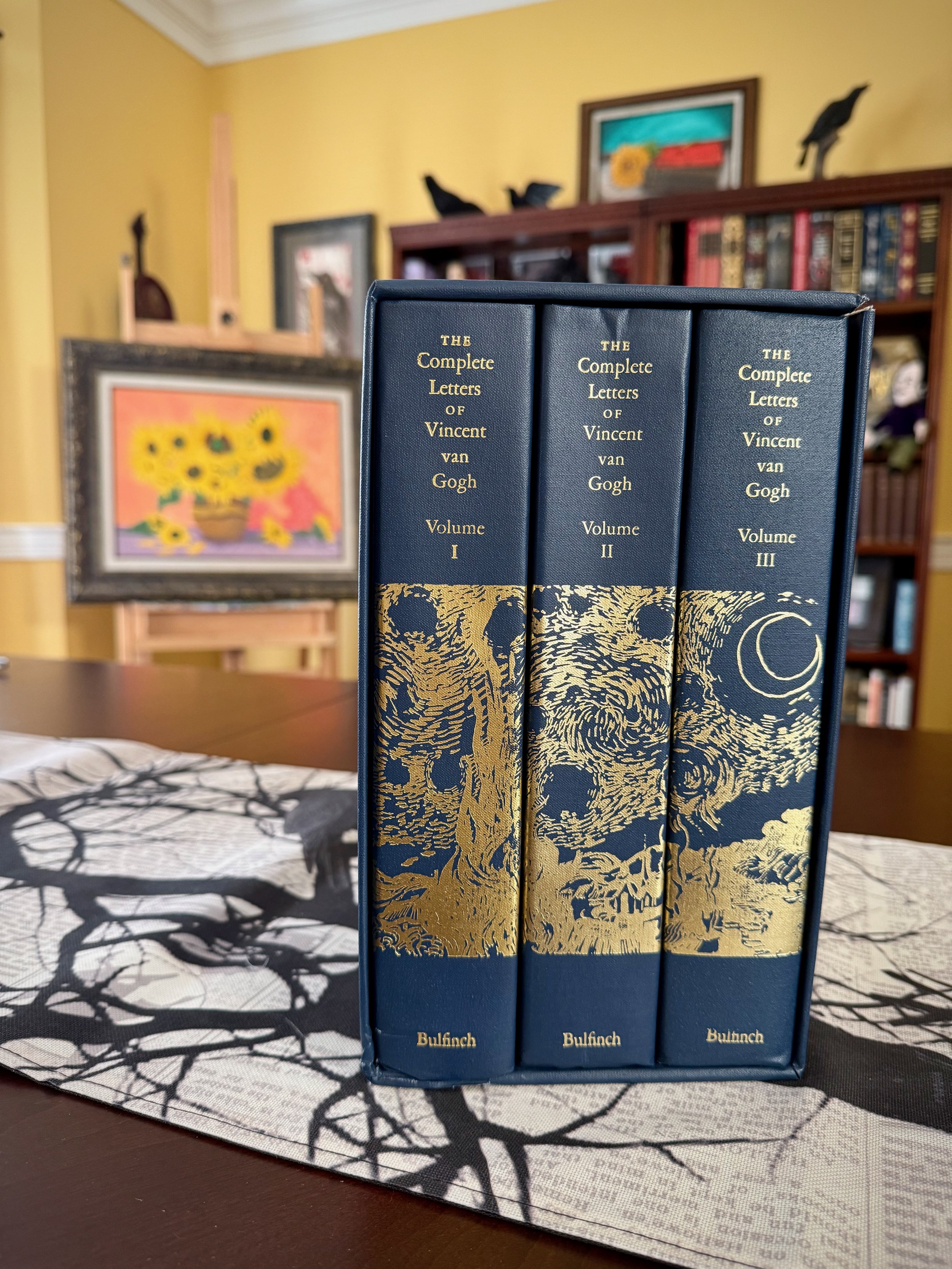
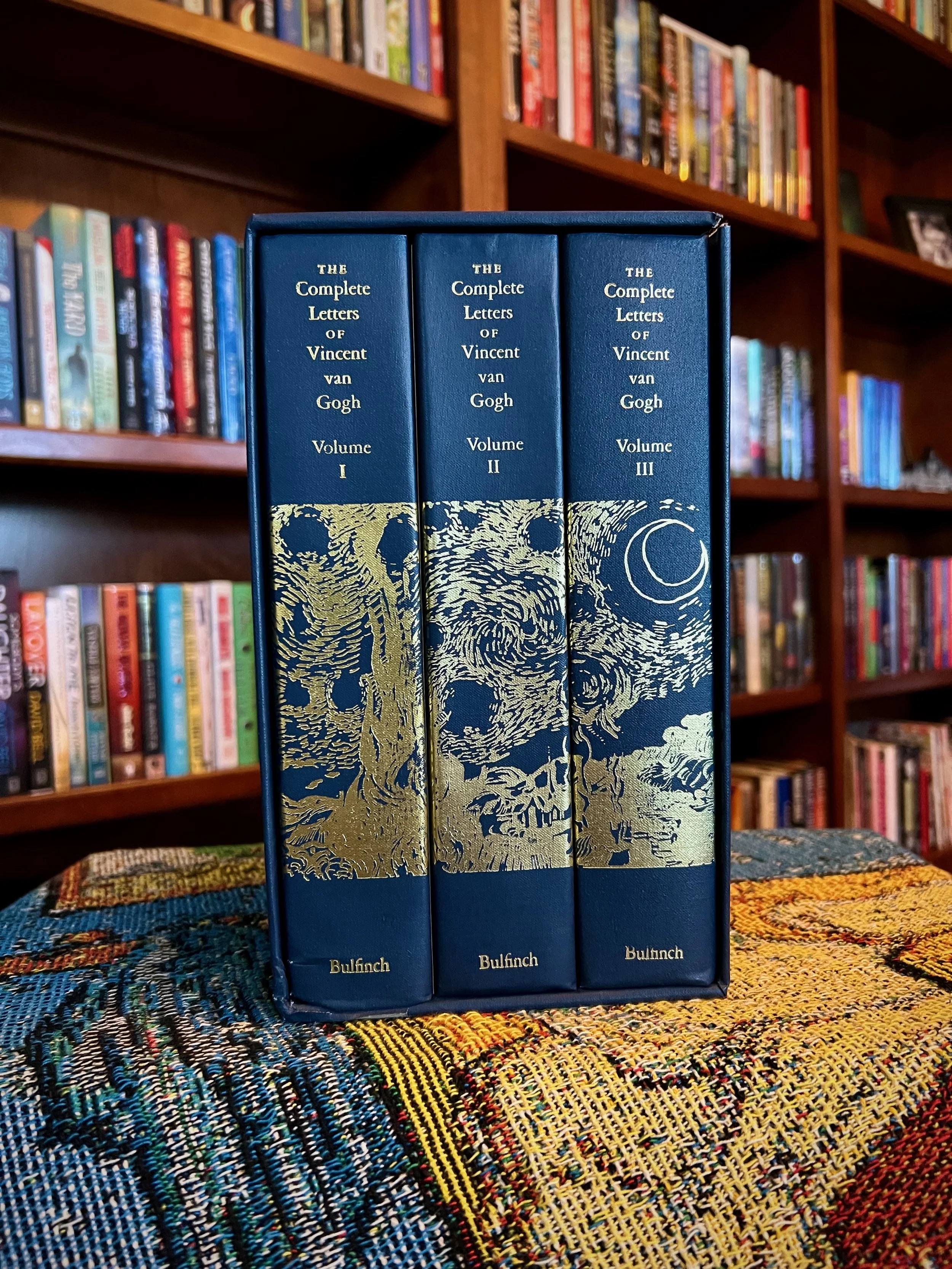
I have been an admirer of art for as long as I can remember. On Christmas 2000, my mom gave me the gorgeous three-volume set of The Complete Letters of Vincent van Gogh. At roughly 1,800 pages it looked daunting, so it sat proudly on my library shelf for years. Fast forward to 2026: I decided it was finally time to meet Vincent the only way I still can.
I did not realize, until I read Hans Luijten’sJo van Gogh-Bonger: The Woman Who Made Vincent Famous, how completely Jo stands behind this collection. After Theo’s death she gathered, preserved, and first published Vincent’s letters. The English Complete Letters appeared in 1958, with a second edition in 1978 and a third in 2000; mine is that 2000 edition. Theo and Jo’s son, Vincent Willem van Gogh, played a prominent role in seeing the complete English edition into print.
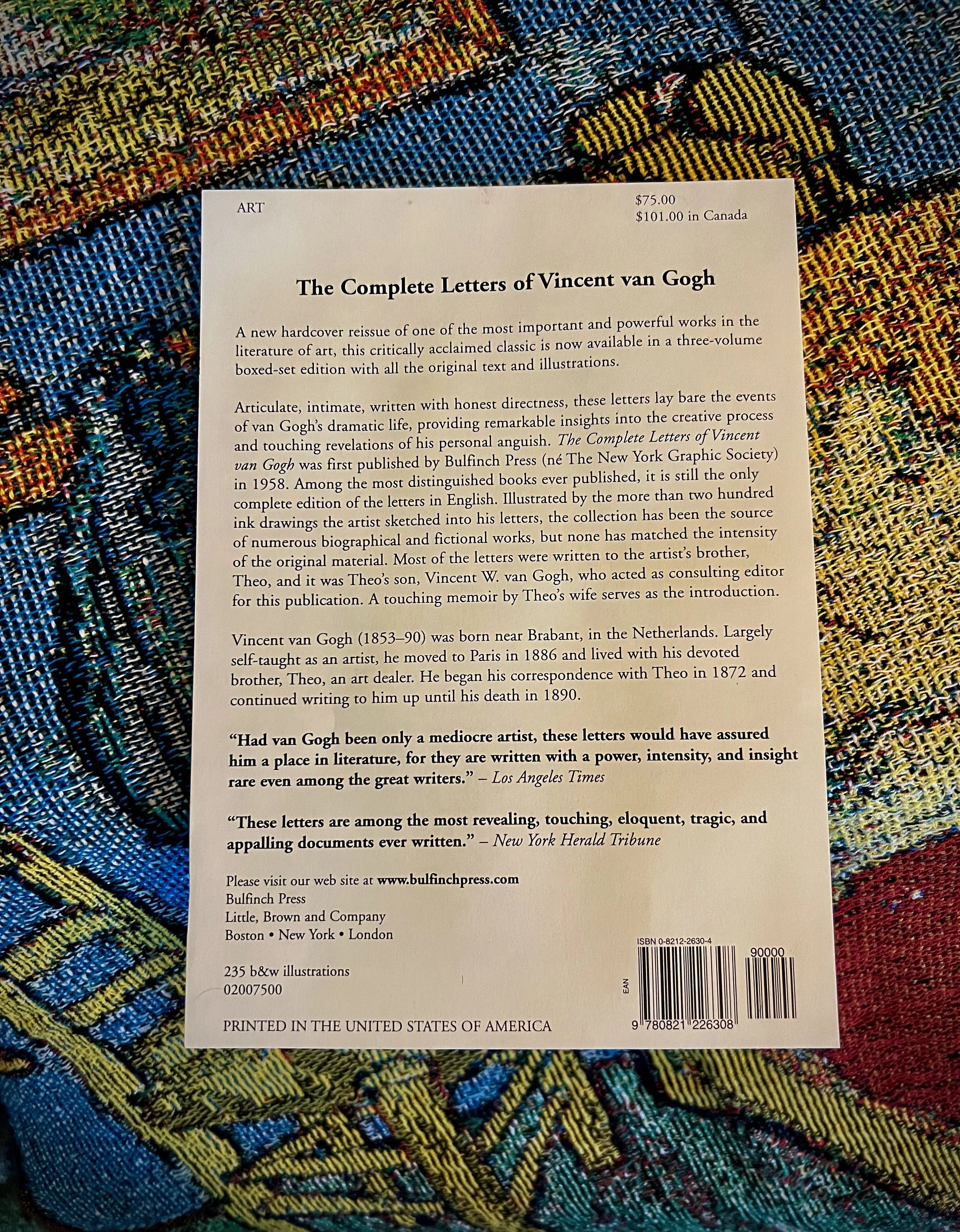
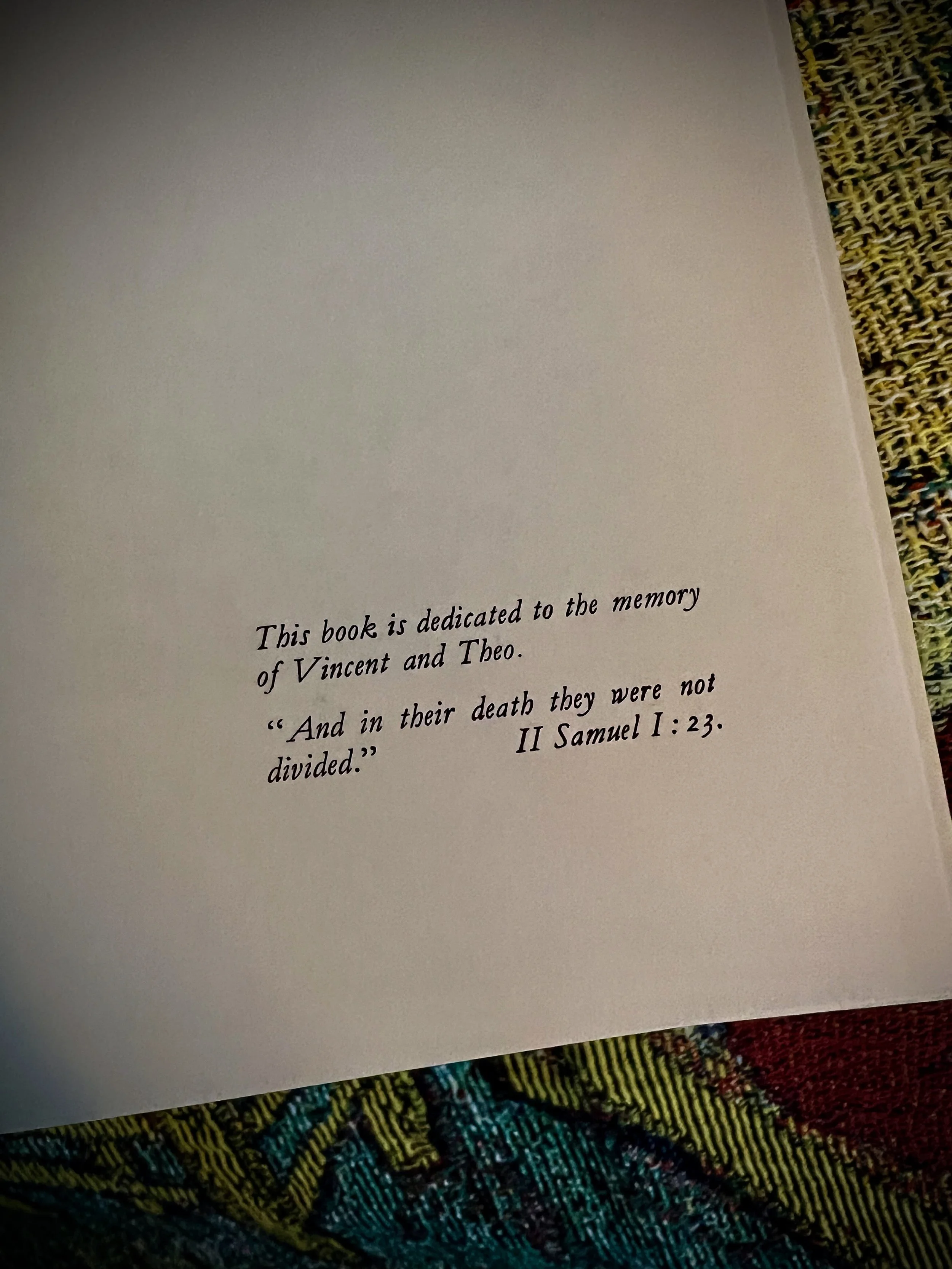
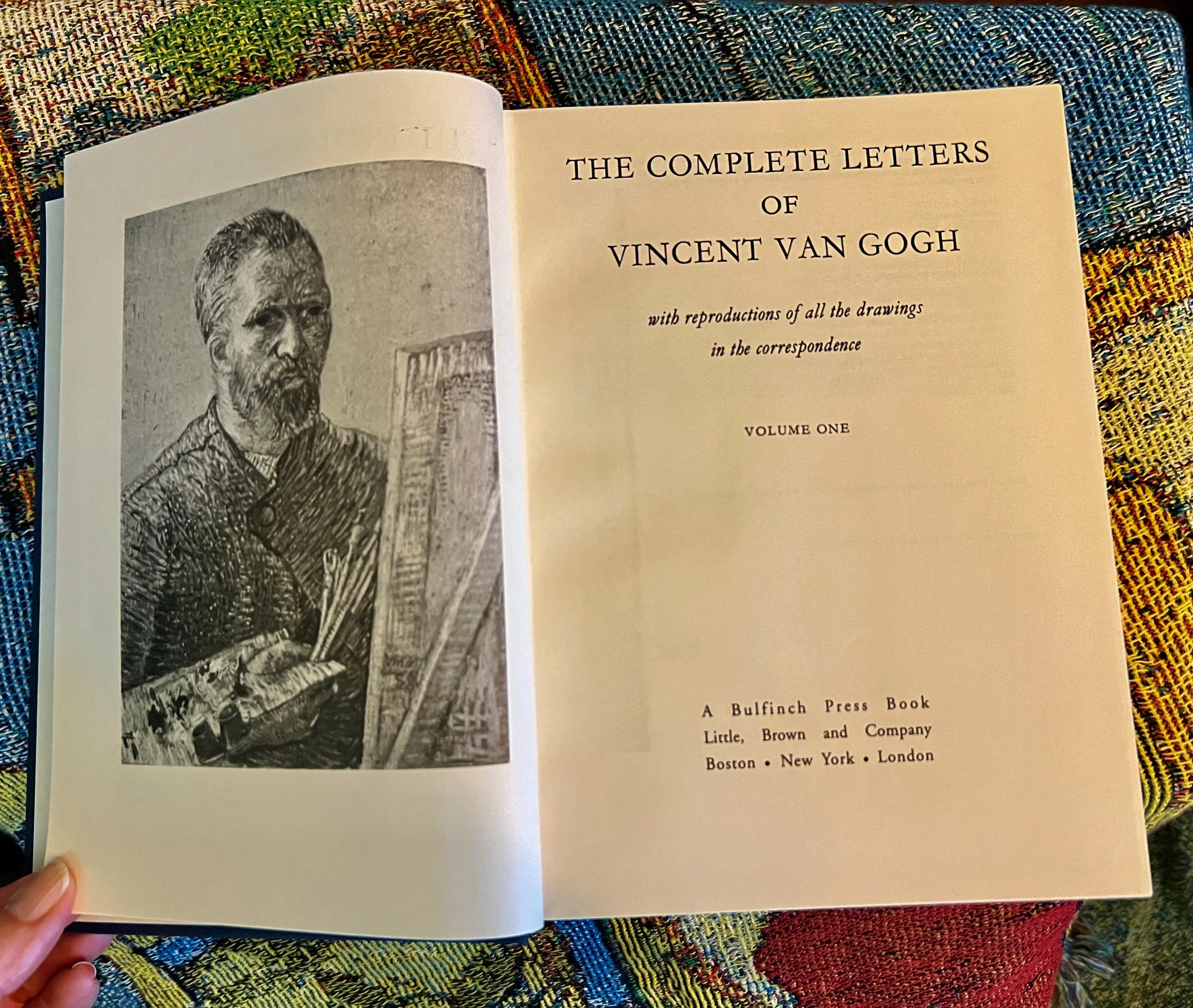
It is a magnificent piece of literary and visual art. The set reproduces the drawings Vincent sketched into his correspondence. The introduction is by Willem. The preface and memoir of Vincent are by Jo—it was a pleasure to hear her voice—and she also shares letters Theo wrote during visits to his brother. Willem’s memoir of Jo is here as well. It is moving to imagine him growing up in a house lined with his uncle’s paintings.
Because the letters are dense in both length and feeling, I first aimed at twenty-five pages a day, then dropped the goal to five. That smaller daily stretch made it possible to stay with Vincent instead of racing past him.
The correspondence begins in August 1872 and runs to Vincent’s death in 1890. The early letters, when he still hoped to become a clergyman like his father, were tedious for me. I am drawn to spirituality; I am less drawn to institutional religion. As the letters go on, his philosophical mind takes over, and my interest caught fire. He loved the natural world, and his descriptions of places are beautiful.
Jo and Willem did a great deal of detective work around the events Vincent describes. They spoke with people who had known him when he worked for the art dealers, and they tracked down others from later chapters of his life to hear how he had struck them.
There was a stretch, before he committed himself to painting, when Vincent and Theo barely wrote for months. I had the sense of a rupture—Theo pressing him to work and earn his way—followed by a long letter in which Vincent tried to explain that he was trying, and that the world was not receiving him. It is a philosophical letter, and it shows how sharp his mind was.
I love that he was a prolific reader. I think he and I would have talked about books the way he talked about them with Theo and his sister Willemien.
Once he gave himself to painting, he truly saw himself and Theo as partners. The pictures, he said, belonged to both of them. Theo paid the bills; Vincent sent paintings, drawings, and sketches as a kind of repayment. It was surreal to read him describe, as he made them, canvases the world now knows by heart.
The collection also includes letters to artist friends Émile Bernard and Anthon van Rappard, letters to Willemien, and letters from Theo and Jo. All the while I was reading Vincent to Theo, I wondered how Theo answered. I caught slivers when Vincent echoed him, but I wanted to know whether Theo was ever annoyed, exasperated, or simply helpless. The few letters of Theo’s that survive were a gift. In them he is nothing but compassion. He believed in the work and was glad to send the money it required. You can feel the love.
Reading, I kept reminding myself what I was holding: a daily life, not a myth. I tried to picture Vincent in a room. He is fiercely philosophical. His struggles with mental health are plain on the page. He also comes through as a kind and gentle soul, which makes it sadder that so many people found him hard to bear.
I am thrilled I finally read these three volumes. It was an honor to be let into his days. Lasting thanks to Jo and Willem for the enormous labor of gathering and shaping the letters.
If you want more of Vincent, and of the sister-in-law who made his fame possible, I recommend Van Gogh: The Life by Steven Naifeh and Gregory White Smith, and Luijten’s biography of Jo. The Life is a comprehensive biography; it also argues, against the usual story, that Vincent’s death was not a suicide. You can read my review of Jo’s biography here.
After a short break I plan to read Van Gogh and the Artists He Loved by Steven Naifeh. I also have Dear Theo: The Autobiography of Vincent van Gogh, arranged by Irving Stone, waiting in my Audible library. I’m curious how the letters feel when they’re shaped into a single narrative and heard rather than read.
In 2022 my husband and I saw Van Gogh in America at the Detroit Institute of Arts. My Adventures post is linked below.
Van Gogh in America: Detroit Institute of Arts
I’ll leave you with the trailer for At Eternity’s Gate, the moving film starring Willem Dafoe. Now that the letters are finished, it is time for a rewatch.
“I have walked this earth for thirty years, and, out of gratitude, want to leave some souvenir in the shape of drawings or pictures—not made to please a certain taste in art, but to express a sincere human feeling. So this work is my aim-and when one concentrates on that one idea, everything one does is simplified in that it is not chaotic, but all done with one object in mind.” ~Vincent van Gogh
As a participant in the Amazon Associates Program, I earn from qualifying purchases linked back to Amazon. Every penny earned allows me to blog about books and keeps this site running.
