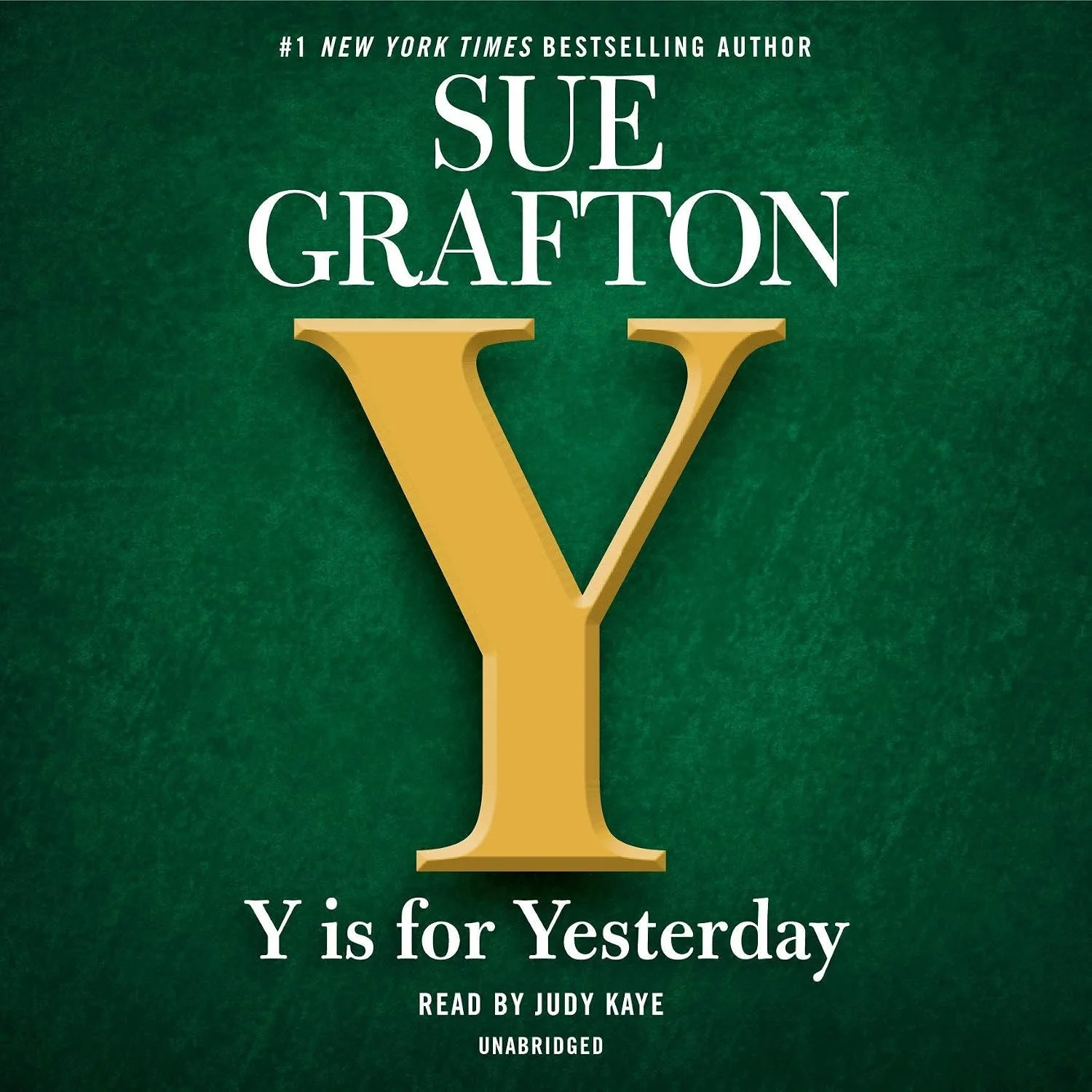
Y is for Yesterday (by Sue Grafton)
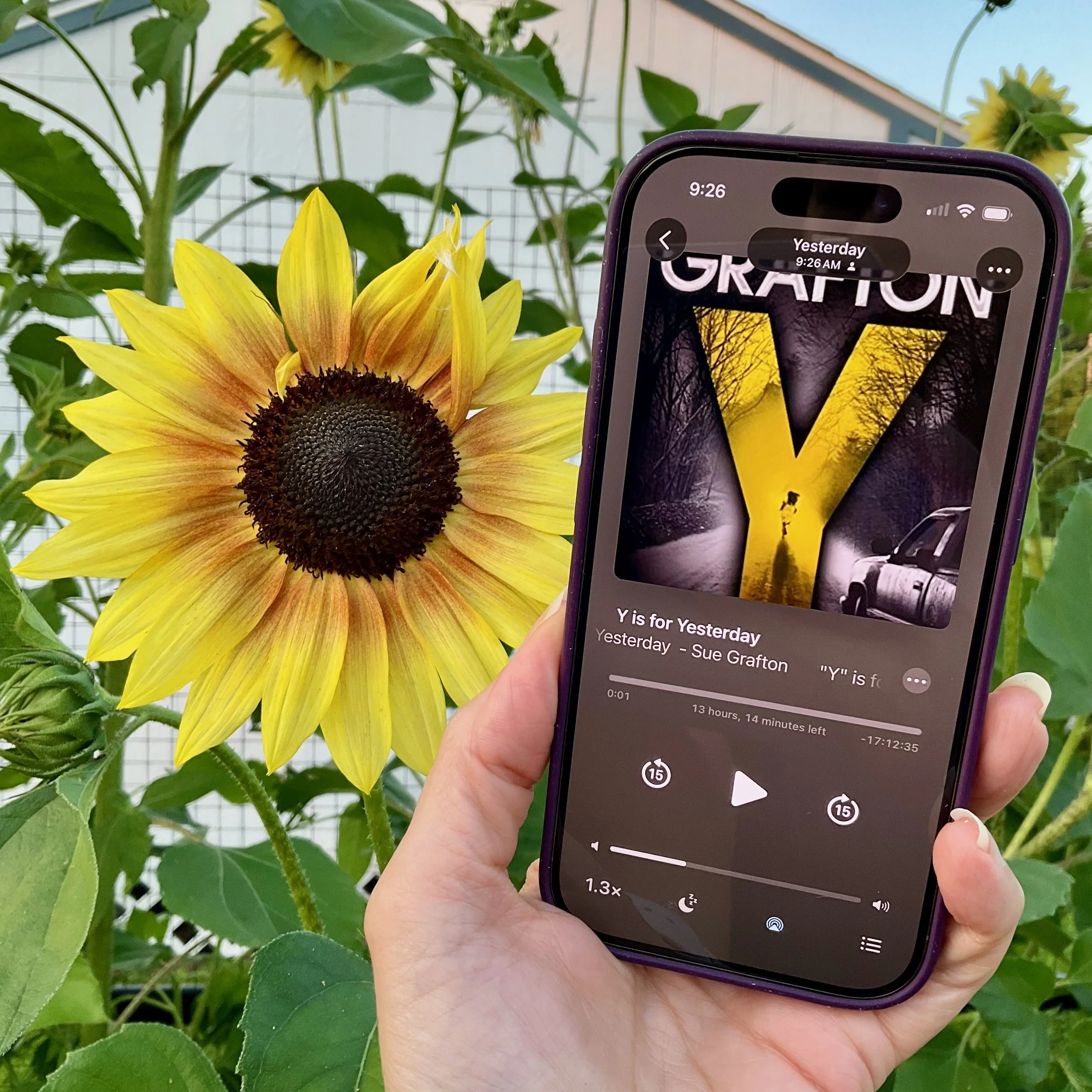
My journey through the Alphabet series began in 2017, after I saw Sue Grafton in conversation with John Grisham. He was talking about The Rooster Bar, and she had recently released Y is for Yesterday. I was so impressed by her personality—and so intrigued by the books—that I decided to start the series. Little did I know she would die a few months later.
I finally reached the end of the alphabet with Y is for Yesterday. Set primarily in 1989, the novel pulls private investigator Kinsey Millhone into a case that began a decade earlier at an exclusive Santa Teresa private school. In 1979, four teenage boys sexually assaulted a fourteen-year-old classmate and secretly recorded the attack. Soon after, the tape vanished, and the student suspected of taking it was murdered. One boy turned state’s evidence. Two others were convicted. The ringleader got away.
Ten years later, one of the convicted boys, Fritz McCabe, is released from prison. His wealthy, controlling parents receive a copy of the missing tape and a ransom demand. They hire Kinsey to find the blackmailer. While she works that case, she also has to keep an eye on Fritz and contend with Ned Lowe, the dangerous figure from X who still has a grudge against her.
I listened to the audiobook from Apple Books. Judy Kaye’s narration was satisfying.
I didn’t care much for this novel, and that is especially disappointing because it is the last book in the series. Grafton died before Z could be written, so the alphabet ends here. It is a letdown for the series to close on a book I never really connected with.
Too much is going on at once. There is the blackmail case Kinsey is hired to solve, the flashback chapters that reconstruct the original crime, Ned Lowe’s stalking carried over from the previous book, and two homeless people from an earlier installment camping in Henry’s backyard. I always enjoy Henry, and his name comes up often, but he is seldom actually on the page. He is rarely home.
As for the case itself, Grafton never gave me a reason to care about the high school kids—then or later. At first, I cared about Iris, but then she fell in with Poppy, and they were smoking weed and cheating on a test. The group reads like spoiled rich kids with no sense of personal responsibility.
I was also confused that Kinsey was hired by Fritz’s parents, given his role in the assault. He is immature and obnoxious, and his parents are not likable either. I enjoy Kinsey’s cases most when she is helping someone who deserves help or someone who has been wronged. It is hard to invest in a book when the central characters have so few redeeming qualities.
It did help, at the end, to learn what really happened in 1979. Getting there felt dragged out. I waited too long for the outcome. Kinsey also seemed snarkier and less compassionate here. I thought some of her remarks to the homeless people Henry was trying to help were unnecessarily insensitive.
Overall, something felt off. The book is a sharp turn from the cases I associated with earlier Kinsey novels. After a little digging, I learned that much of that difference was intentional. Grafton drew on two cases that had stayed with her: a teenager taken and later killed because of a brother’s drug debt, and a case in which boys assaulted a girl, filmed it, and circulated the images before she even knew. She was interested in how clueless and irresponsible the teenagers were—how a whole group could know something terrible and still tell no one.
I probably should have DNF’d this one. So why didn’t I? It would not have sat right to read twenty-four books and then walk away from the last one she wrote. I felt I owed it to myself to finish her final published novel. I was also curious whether she would wrap up Kinsey’s two-book ordeal with Ned Lowe. At the very least, it feels like an accomplishment to complete a series this long.
I am glad I read the Alphabet books, and I am equally glad to be finished. It is unfortunate that the last installment was a disappointment, but that also makes it easier to close the door on Kinsey Millhone.
Linked below are my reviews of other books in the series, plus my author-event post on Grafton’s conversation with John Grisham.
John Grisham in Conversation with Sue Grafton
Thanks for sticking around to read this one. Please enjoy a few extra photos of my sunflowers.


As a participant in the Amazon Associates Program, I earn from qualifying purchases linked back to Amazon. Every penny earned allows me to blog about books and keeps this site running.
